News
Second Satellite of "HNUST Constellation" Successfully Launched
The Kuaizhou-11 Y7 carrier rocket lifted off from the Jiuquan Satellite Launch Center and successfully sent the "HNUST-2" satellite into its target orbit on March 16, 2026. The launch mission was a complete success.
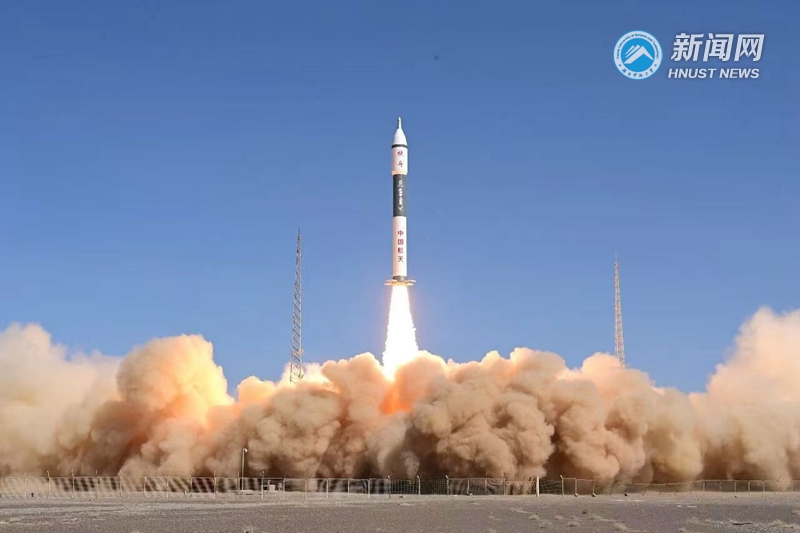
A New Mission: "Space Refueling Station"
"HNUST-2" was jointly developed by Hunan University of Science and Technology (HNUST) and Suzhou Sustain Space Technology Co., Ltd. It is China's first commercial in-orbit operation test satellite equipped with a flexible robotic arm, and is widely referred to in the industry as a "space refueling station" test satellite. Its primary mission is to demonstrate in-orbit refueling for satellites that have exhausted their fuel.
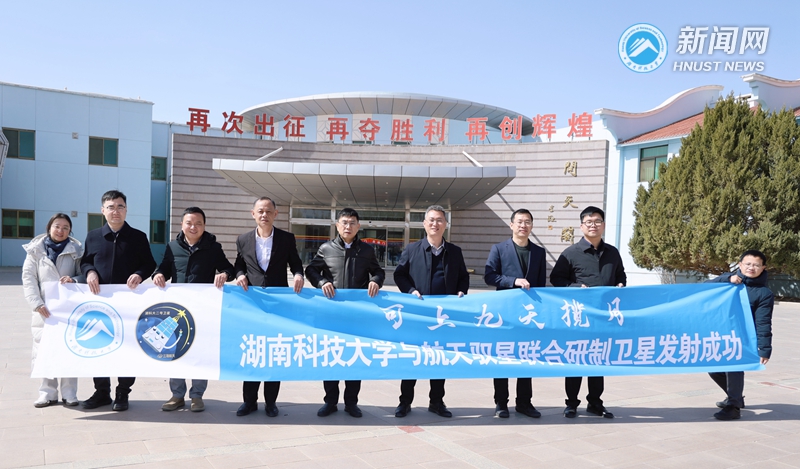
From observation by HNUST-1 to operation by HNUST-2, this marks a crucial step forward. As the number of satellites in orbit continues to grow, many platforms remain functionally intact but are forced into premature retirement due to fuel depletion. In-orbit refueling technology is therefore seen as a key solution for extending satellite lifespans and reducing operational costs.
Two Major Innovations: "Refueling Arm" and "Deorbit Sphere"
The innovations of "HNUST-2" are embodied in two key payloads, which address the "birth" and "death" of satellites.
The first is the "space refueling arm." This flexible robotic arm mimics the structure of an elephant's trunk or an octopus tentacles, allowing continuous bending and agile movement. It enables safer, compliant docking with target satellites, avoiding the risks of rigid collisions. During its in-orbit period, it will conduct multiple simulated refueling demonstrations.
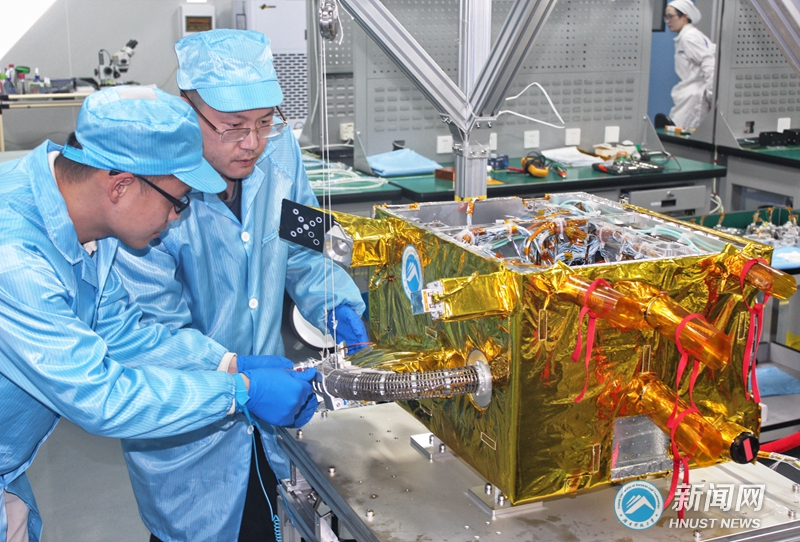
The second is the "deorbit damping sphere." At the end of the satellite's service life, this device can be inflated in orbit to form a sphere 2.5 meters in diameter. Acting like a drag parachute, it increases atmospheric drag, reducing the satellite's deorbit time from decades to less than one year.
Three "Deep" Strategies: From Deep Earth to Deep Sea to Deep Space
From "HNUST-1" to "HNUST-2", HNUST has advanced strategically from observation to operation. Jiang Lizhong, Secretary of the Party Committee of HNUST, said that the deep sea, deep earth, and deep space are the three key areas of the HNUST's distinctive development. Building on the internationally recognized achievements of the "Hainiu" deep-sea drilling rig, HNUST's expansion into space information technology and its development of an in-orbit service innovation chain represent a natural step in supporting high-level technological self-reliance and self-improvement.
To date, HNUST has established a space information platform that integrates a satellite receiving station, remote sensing data processing, and industry applications into "One Station and Three Centers." This places HNUST among a select group of Chinese universities with their own satellite constellation and supporting ground systems.
"HNUST-2" has now begun its experimental journey in space. Over the coming months, every move it makes will be transmitted via radio waves back to the HNUST's ground station thousands of miles away, conveying the ambition of a local university to reach for deep space while serving life on Earth.
(Translated by LI Xiangyi, LI Mengri)